The AI Trade Trolley Problem

At this point, the AI trade looks a lot like the runaway train from the trolley problem. Disruption – in some form – is coming. This train will run people over.
That leaves us with the following available options:
- do nothing and watch it go by
- try to stop it (and potentially get run over yourself)
- redirect it onto a different track (i.e. regulate it)
- jump on the train (to deliver value to society/run people over)
- move people from the tracks and onto the train
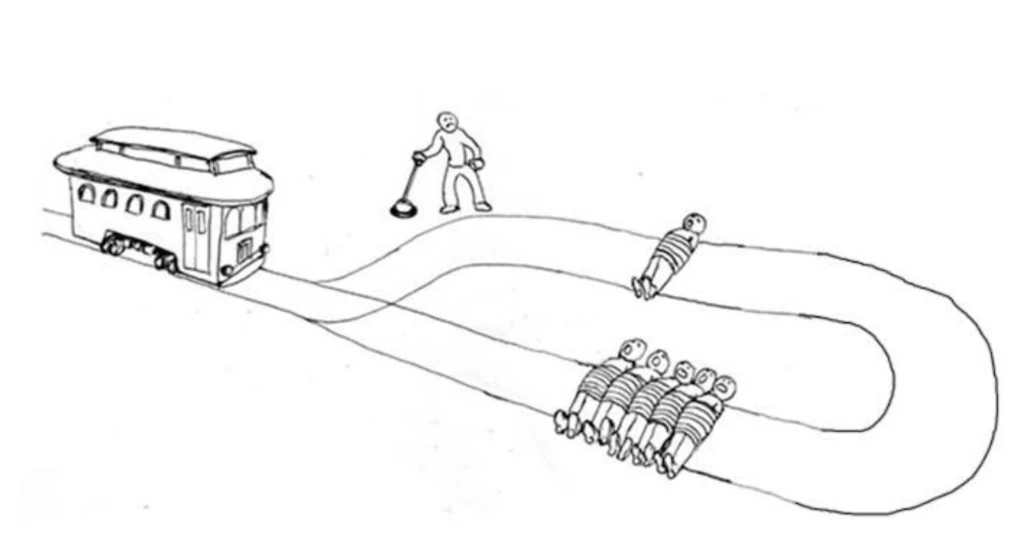
Is there a right choice? I'm not here to judge. I think there are pros and cons to each response.
Regulation could be effective in mitigating some of the major risks around misuse and alignment. But it's never that straight forward. Regulation is often written by incumbents to stifle competition. Without global agreement on regulation, regulation can be a risk unto itself.
In theory, AI has the potential to deliver great value to society, but at this stage, those benefits are not clearly emergent. Most innovation seems more focussed on rearranging the economy rather than on redefining it.
These concerns are obviously outside my own sphere of influence, so let's bring it closer to home.
The barrier-to-entry for software developers is going up. I taught coding for a number of years, and always loved how anyone with a laptop, the right guidance and a lot of determination could get themselves into the industry.
Today, $2000 a year for Claude subscription is normalised. Many are throwing tens of thousands of dollars in compute at problems. Inference costs will likely come down (how much once the loss-making phase of the AI trade is over remains to be seen), but usage will also go up as we find more ways to burn tokens. I worry this trend will make software engineering less meritocratic, and drive innovation into corporations.
Meanwhile, there is the prospect of monopolisation. It would be a bad outcome if big tech, who trained their models on the work produced by the industry, consolidate power by renting that knowledge back to the industry uncontested. (Here I think competition regulation would be prudent: if it was fair game for the AI labs to train models on humanity's knowledge, then it should be fair game for others to train on their models).
As Linux and FOSS challenged Microsoft's early monopoly power (which we have all benefited from enormously), I expect we will see a similar movement in AI – not just to challenge the AI monopolies, but also to challenge existing monopolies by leveraging AI against them.
I don't know exactly what that looks like, but I want to be part of it.
Thanks for reading! If you enjoyed this, subscribe for free to get next month's post delivered direct to your inbox.